Nano Banana 2.1 vs Nano Banana 2: what changed, benchmarks and price
Nano Banana 2.1 vs Nano Banana 2: what Google changed, model card benchmarks, the price per image at each size, and when to switch before the shutdown.
Read as MarkdownNano Banana 2.1 is the direct replacement for Nano Banana 2: Google released it on October 6, 2026, scores it higher than Nano Banana 2 on every test in its model card, charges half as much per output image, and will shut Nano Banana 2 down in its API on October 29, 2026.[1][3][4] The two things Nano Banana 2.1 drops are the 512px size and Nano Banana 2's cheaper input and thinking tokens.
Prices and scores as published by Google, checked on October 7, 2026.
Model pages: Nano Banana 2.1, Nano Banana 2, Nano Banana Pro.
Nano Banana 2.1 vs Nano Banana 2 at a glance
| Nano Banana 2.1 | Nano Banana 2 | |
|---|---|---|
| Model ID | gemini-nano-banana-2.1 | gemini-3.1-flash-image |
| Released (stable) | October 6, 2026 | May 28, 2026 |
| Status in the Gemini API | Stable | Deprecated, shut down October 29, 2026 |
| Output sizes | 1K, 2K, 4K | 512px, 1K, 2K, 4K |
| Aspect ratios | 14, from 1:8 to 8:1 | 14, from 1:8 to 8:1 |
| Thinking levels | minimal, medium (default), high | minimal (default), high |
| Reference images | Up to 14 (10 objects, 4 characters) | Up to 14 (10 objects, 4 characters) |
| Inputs | Text, image, video, PDF | Text, image, video, PDF |
| Google's price per 1K image | $0.0336 | $0.067 |
Sources: the Gemini API changelog, the two model pages, the image generation guide and Google's price list.[1][2][4][5] Google describes Nano Banana 2.1 as an update to Nano Banana 2 that "maintains Flash-level speed and cost efficiency", and its model card says it is based on Gemini 3.6 Flash.[2][3]
What changed in Nano Banana 2.1
Google lists five changes on the model page:[2]
- Better visual quality and realism at 1K, 2K and 4K.
- Fixed tiling artifacts on the wide and tall ratios (1:4, 4:1, 1:8, 8:1) at 2K and 4K, so banners and strips no longer show repeated seams.
- More accurate text rendering and infographic layouts.
- Better character consistency across multi-turn edits.
- A third thinking level,
medium, which is now the default.
What it loses is the 512px size: the image generation guide says 512px is "not supported on Gemini Nano Banana 2.1".[5] Code that asks Nano Banana 2 for 512 drafts has to move to 1K.
Benchmarks: Google's model card
Google DeepMind scored Nano Banana 2.1 with side-by-side human preference tests, reported as Elo ratings where a higher number won more comparisons. Nano Banana 2.1 leads Nano Banana 2 on every row, with thinking on or off, and it also leads Nano Banana Pro:[3]
| Test | Nano Banana 2.1 (thinking) | Nano Banana 2.1 (no thinking) | Nano Banana 2 (thinking) | Nano Banana Pro |
|---|---|---|---|---|
| Text to image, overall preference | 1050 | 1015 | 990 | 935 |
| Infographic design | 1048 | 1001 | 961 | 912 |
| General editing | 1026 | 980 | 938 | 939 |
| Multi-character consistency | 1106 | 1068 | 978 | 1011 |
| Mask and ink-based editing | 1049 | 1042 | 965 | 927 |
| Multi-reference editing | 1066 | 1041 | 988 | 989 |
The card also reports an infographic factuality score of 0.521 for Nano Banana 2.1 with thinking, against 0.179 for Nano Banana 2.[3] These are Google's own tests of Google's own models; no independent arena had published scores for Nano Banana 2.1 when we checked.
We ran the same prompt through both models at 16:9 and 1K: "A red fox sitting in a snowy pine forest at dawn, photorealistic. No text, no logos."
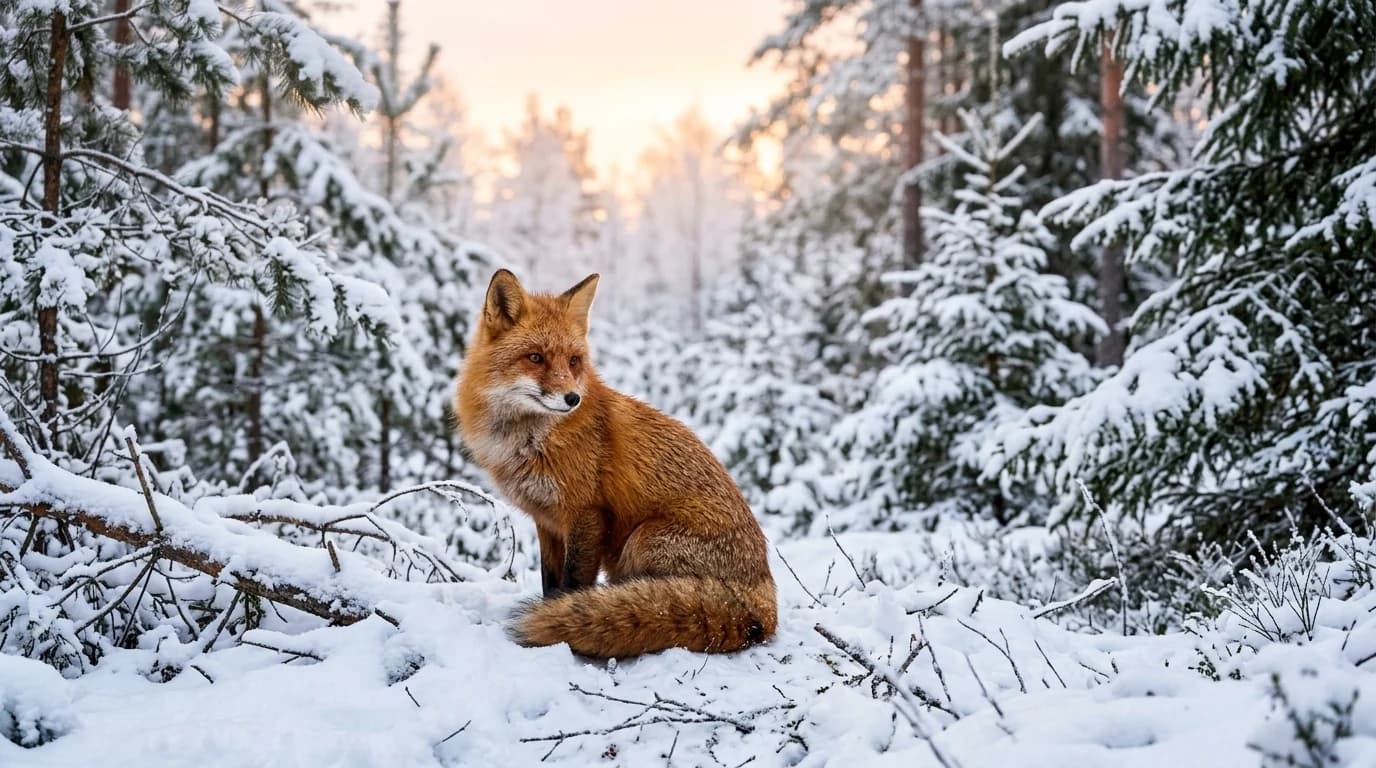
Nano Banana 2, 1K, 16:9 (1376 × 768).

Nano Banana 2.1, 1K, 16:9 (1376 × 768), default thinking.
One prompt is an example, not a verdict. The differences Google reports show up most in text, infographics and multi-step edits, which a single photo prompt does not test.
Price: cheaper images, dearer tokens around them
Google's Standard rates per million tokens:[4]
| Per 1M tokens | Nano Banana 2.1 | Nano Banana 2 |
|---|---|---|
| Input (text, image) | $1.50 | $0.50 |
| Text and thinking output | $7.50 | $3.00 |
| Image output | $30.00 | $60.00 |
Both models spend the same image tokens per size (1,120 at 1K, 1,680 at 2K, 2,520 at 4K), so the image itself costs half as much on Nano Banana 2.1:[4][5]
| Google's price per image | 1K | 2K | 4K |
|---|---|---|---|
| Nano Banana 2.1 | $0.0336 | $0.0504 | $0.0756 |
| Nano Banana 2 | $0.067 | $0.101 | $0.151 |
The prompt and the thinking around each image cost more. In our 1K test above, Nano Banana 2.1 reported 845 thinking tokens and 332 more text tokens, about $0.009 at its text rate, so the image came to about $0.042 in total, against about $0.069 for the same prompt on Nano Banana 2 (its image plus 451 text tokens).
SeedRouter sells Nano Banana 2.1 at one flat price per delivered image, the same at 1K, 2K and 4K, so thinking and prompt length do not change the bill. Current prices for both models:
Nano Banana 2
Nano Banana 2 (Gemini 3.1 Flash Image) is sold on 2 channels. Both IDs accept the same request body; pick the ID whose billing suits the request.
| Channel | Model IDs | Billed by | Current rate (USD) |
|---|---|---|---|
| Official | gemini-3.1-flash-image-official | Tokens each render reports (input + image output + text and thinking output) | $0.375 per 1M input tokens; $45 per 1M image output tokens; $2.25 per 1M text and thinking output tokens |
| Standard | gemini-3.1-flash-image | Flat price per delivered image, at any size | $0.03 per delivered image |
Token rates are the published first-tier rates; usage in a different tier may be charged differently.
Cost of one image by image size
Image tokens per size are the counts Google publishes for Gemini 3.1 Flash Image. Token-billed figures add a measured sample of 405 text and thinking output tokens and 27 prompt tokens; actual usage varies with the prompt, references and thinking, so they are estimates, not fixed prices. Flat-priced channels charge the same at every size.
| Image size | Image output tokens | Official USD | Standard USD |
|---|---|---|---|
| 512 | 747 | $0.03453638 | $0.03 |
| 1K | 1120 | $0.05132138 | $0.03 |
| 2K | 1680 | $0.07652138 | $0.03 |
| 4K | 2520 | $0.11432138 | $0.03 |
Formula (Official): (input tokens × 0.375 + image output tokens × 45 + text and thinking output tokens × 2.25) / 1,000,000 USD. One request returns one image. Final charges are available in account usage history. Failed requests are not charged.
Nano Banana 2.1
Nano Banana 2.1 (Gemini Nano Banana 2.1) is sold on 1 channel.
| Channel | Model IDs | Billed by | Current rate (USD) |
|---|---|---|---|
| Standard | gemini-nano-banana-2.1 | Flat price per delivered image, at any size | $0.03 per delivered image |
Cost of one image by image size
Image tokens per size are the counts Google publishes for Gemini Nano Banana 2.1. Token-billed figures add a measured sample of 1177 text and thinking output tokens and 22 prompt tokens; actual usage varies with the prompt, references and thinking, so they are estimates, not fixed prices. Flat-priced channels charge the same at every size.
| Image size | Image output tokens | Standard USD |
|---|---|---|
| 1K | 1120 | $0.03 |
| 2K | 1680 | $0.03 |
| 4K | 2520 | $0.03 |
One request returns one image. Final charges are available in account usage history. Failed requests are not charged.
These rates come from the same table that bills your account.
Speed and thinking levels
Nano Banana 2 thinks at minimal by default; Nano Banana 2.1 defaults to medium.[5] That reasoning takes time. In our single side-by-side run, the 1K fox took about 10 seconds on Nano Banana 2 and about 30 seconds on Nano Banana 2.1. Setting thinkingLevel to MINIMAL removed the thinking tokens in our tests; the model card's "no thinking" column shows what that costs in quality, still above Nano Banana 2 on every row.[3]
Moving from Nano Banana 2 to Nano Banana 2.1
Google's Gemini API stops serving gemini-3.1-flash-image on October 29, 2026.[1] The request body stays Google's generateContent format, so most code needs three edits:
- Change the model ID to
gemini-nano-banana-2.1. - Replace
imageSize: "512"with"1K". - Decide on
thinkingConfig.thinkingLevel: leave it at the defaultMEDIUM, or setMINIMALfor faster drafts andHIGHfor dense layouts.
On SeedRouter both models use the same endpoint and API key. The Nano Banana 2.1 API reference lists every field, and the Nano Banana 2.1 model page has a playground that sends the same request.
Which one should you use?
- Pick Nano Banana 2.1 for anything new: higher scores on every test Google published, half the image price, and it is the model Google keeps.
- Keep Nano Banana 2 only while you still need 512px drafts or the lowest token rates around the image, and plan the switch before October 29, 2026.
Comparison questions
Is Nano Banana 2.1 better than Nano Banana 2?
On Google's own tests, yes, on every one it published: overall preference 1050 against 990, multi-character consistency 1106 against 978.[3] No independent ranking had covered Nano Banana 2.1 when we checked.
Is Nano Banana 2.1 cheaper than Nano Banana 2?
Per image, yes: Google charges $0.0336 for a 1K image against $0.067 on Nano Banana 2. Input and thinking tokens cost more on Nano Banana 2.1, but in our test they added less than the image saved.[4]
Does Nano Banana 2.1 support 512px images?
No. Nano Banana 2.1 outputs 1K, 2K or 4K; 512px was a Nano Banana 2 size.[5]
Is Nano Banana 2.1 better than Nano Banana Pro?
Google's model card scores Nano Banana 2.1 above Nano Banana Pro on every listed test, for example 1050 against 935 for overall text-to-image preference.[3] Nano Banana Pro still takes a different reference mix: up to five character references and three style references.[5]
References
- Google AI for Developers. Gemini API release notes, October 6, 2026. Retrieved October 7, 2026 from ai.google.dev.
- Google AI for Developers. Gemini Nano Banana 2.1 (model page). Retrieved October 7, 2026 from ai.google.dev.
- Google DeepMind. Nano Banana 2.1 Model Card, published October 6, 2026. Retrieved October 7, 2026 from deepmind.google.
- Google AI for Developers. Gemini Developer API pricing. Checked October 7, 2026 at ai.google.dev.
- Google AI for Developers. Nano Banana image generation. Retrieved October 7, 2026 from ai.google.dev.